
What moves when the ground moves
A brick chimney is the one part of a wood-frame house that cannot bend. When the ground shakes, the framing sways and settles back while the masonry resists, and the strain gathers where the stack leaves the roof. In 1987 the Whittier Narrows shock and, seven years later, the 1994 quake left plenty of southeast Los Angeles County houses standing with chimneys that had cracked right at that line. A crack patched with caulk decades ago can still be there under the paint today.
That is the frame for the question in the title. Repair keeps the masonry you have and makes it sound. Rebuild takes some or all of it down and lays it again to current rules. The choice depends on what the brick is doing, not on how it looks from the street.
The signs we weigh on a Lynwood chimney
When we climb a stack in Lynwood, the decision rests on a short list of facts we can measure:
- Plumb. A level held against the stack tells us whether it still stands straight or has started to lean away from the wall.
- Depth of the mortar failure. Joints that are soft only on the surface can be raked and refilled. Joints that are sand all the way through the wall cannot hold new mortar for long.
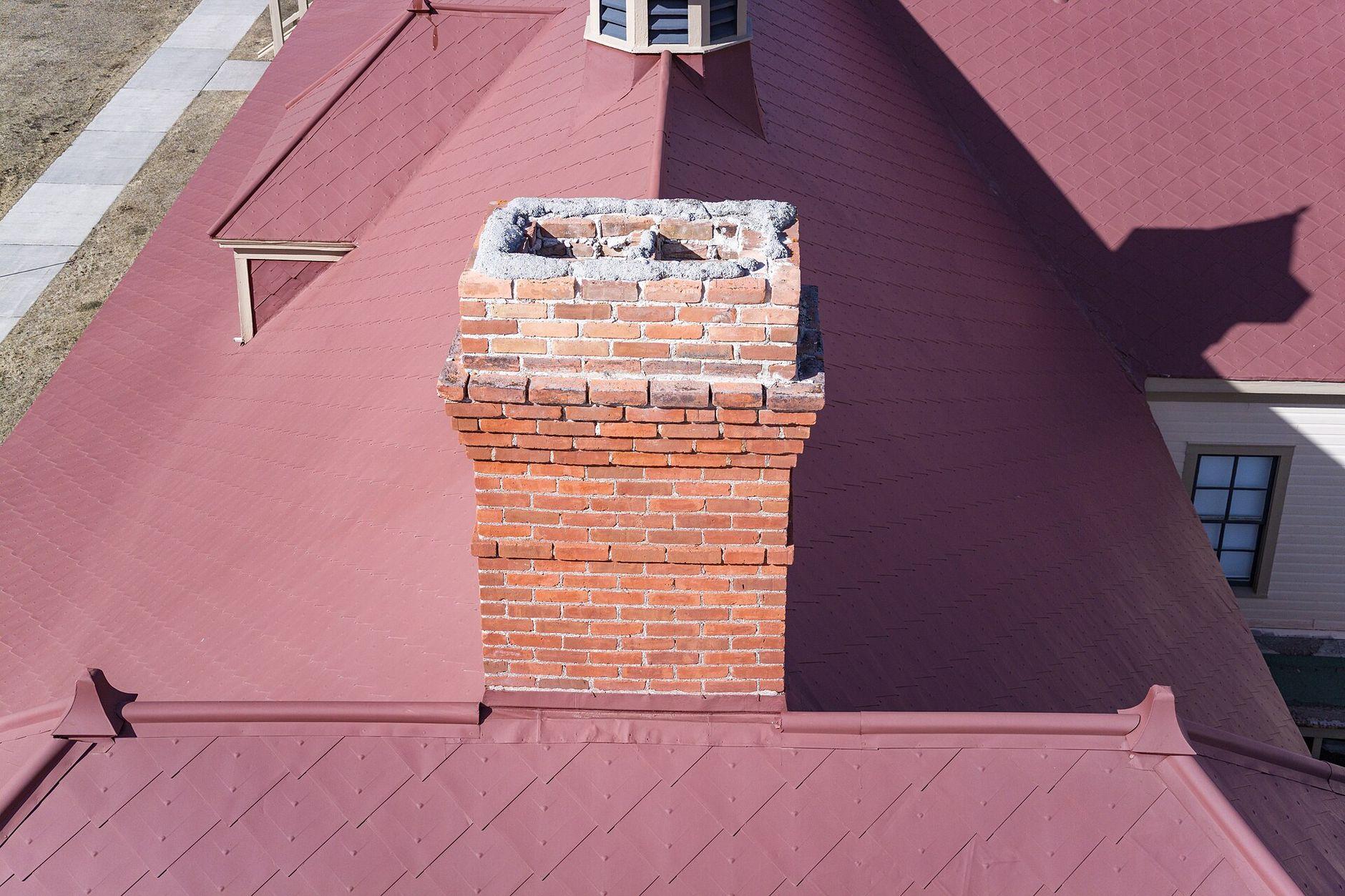
- The brick itself. Faces that have flaked off, or bricks that ring hollow when tapped, point toward replacing courses rather than repointing them.
- A horizontal crack at the roofline. A crack that runs right through the stack at that height is the classic quake break. Above it, the chimney is resting rather than anchored.
- The flue inside. A camera run tells us whether the clay tile has shifted or split, which changes whether any rebuild has to include a new liner.
One of those on its own usually means repair. Two or three together, especially a lean with a through-crack, push the answer toward a rebuild of the section above the roof.
Permits and the code side of a rebuild
Rebuilding a chimney is structural work. A building permit is generally needed, and the new masonry has to meet the code in force today rather than the code the house was built under. In a seismic region like ours, current California rules expect new masonry chimneys to carry steel reinforcing and to be tied back to the house framing. That anchorage is the part of a rebuild a city inspector looks at hardest, and it is the part an older chimney almost never had.
Repointing, crown work and a new cap are maintenance, and they rarely need a permit. That difference is one reason two quotes for the same chimney can look so far apart: one is pricing upkeep, the other is pricing permitted construction.
For insurers, a rebuilt stack with a closed permit is the cleanest answer to the question of whether the chimney is sound. A patched crack is an open one.
Bracing as a middle path
Some chimneys fall between the two answers. The brick is sound, but the stack is tall and unanchored. For those, bracing is the middle option, described here in general terms:
- A steel frame or angle fixed to the upper stack and carried down to the roof structure, so the top cannot rock free.
- Steel straps around the chimney at floor and ceiling lines, fastened into the framing so the house and the masonry move together.
- Taking the brick down to the roofline and finishing above it in a lighter framed chase with a metal flue, which removes the heaviest part from the place most likely to break.
None of those is a promise that a chimney will ride out the next large quake. Each one cuts down the weight, or the swing of that weight, that does the damage. Which suits your house is a site question, and we explain the trade-offs on the visit. Our seismic retrofit page covers the options in more detail.
What a rebuild costs and how we arrive at it
We do not publish a rebuild figure, because no two stacks need the same amount of brick. What we do publish is the first visit: a Level 2 inspection at $385, which puts a camera through the flue and gives us the facts above in writing. From there your written scope names:
- The course where the work stops, above or below the roofline.
- How much of the old brick can be reused and how much is new.
- The reinforcing and the ties into the framing.
- Whether a new liner and cap go in at the same time.
- The permit and the inspection it calls for.
- How we handle damage that only shows once the old courses come off.
If the scope says repair rather than rebuild, the lines are shorter, and most of them sit on our masonry repair and crown repair pages.
Book the Level 2 that starts the scope and note whether the chimney leans, has a crack you can see, or both. We bring the camera and the level.
What a rebuild looks like for Lynwood houses
Many Lynwood homes are single-story stucco houses with one brick chimney on an outside wall. That shape is good news for a rebuild. The stack above the roof is short, the scaffold is modest, and the firebox below can usually stay. The harder cases are chimneys that serve two fireplaces or carry a furnace flue as well, because every flue in the stack has to be rebuilt and lined at once.
Choosing between them
If your chimney stands plumb, its brick is hard and its cracks are surface cracks, repair is the right money. If it leans, rings hollow and breaks through at the roof, a rebuild with permit is the answer that will satisfy an inspector, a buyer and an insurer. For a side-by-side look at how two contractors can price the same chimney, see comparing chimney repair bids, and for the rebuild service itself see chimney rebuilds.
Where to go next
If cracks at the roofline have been on your mind since the last shake, our contact page is the place to raise them. A few words on what you have noticed and roughly when the house was built is all we need to set the inspection.
Want the Rule Checked at Your Chimney?
Malloy works from Lynwood across South Gate, Inglewood and Los Angeles. We measure the chimney against the standard this guide covers, photograph what we find and quote any fix in writing, with a note on whether the city wants a permit.