
A stain is a symptom, not a source
A brown mark on the ceiling near the fireplace tells you water got in. It does not tell you where. On a brick chimney there are at least four ways in, and the stain can show up feet away from the one that is open. That is why a leak price that arrives before anyone has traced the water is really a price for a guess. In Lynwood, where most of the year's rain arrives in a few winter months, a guess that misses usually shows itself at the next storm.
The four ways in
Every leak repair we price starts by deciding which of these is letting water through:
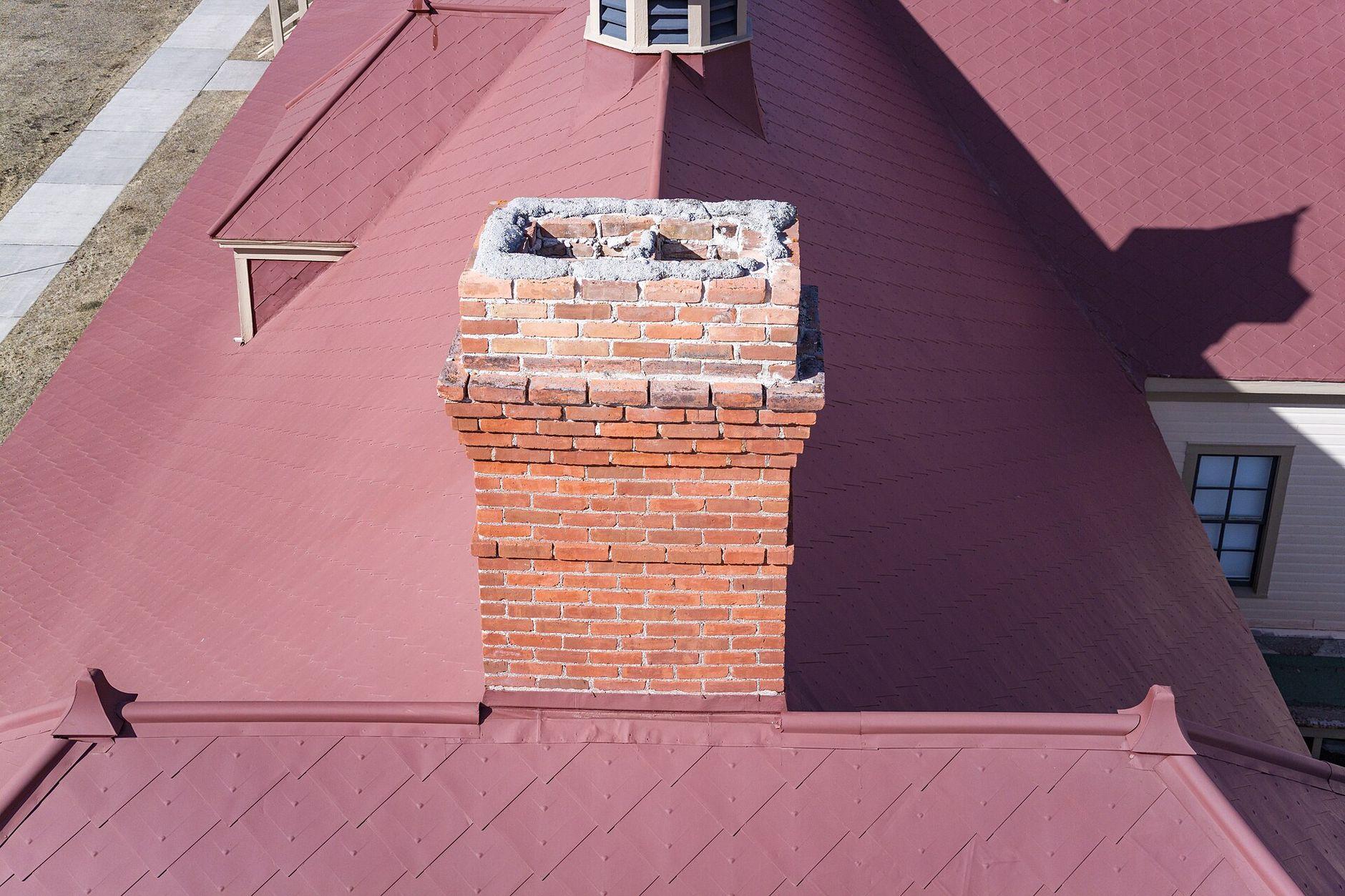
- The top of the chimney. An open flue tile takes rain straight down the middle. A cracked or flat crown lets water soak into the top courses and run down inside the brick.
- The brick and mortar. Old mortar wears to sand and brick faces flake. Each open joint is a small drain into the wall of the stack.
- The flashing. The metal that seals the gap between the roof and the chimney is the most common culprit we find. Sealant smeared over the seam instead of metal cut into the joints fails first.
- The uphill side of a wide stack. On a chimney broad enough to dam the roof, water and debris collect against the high side and work under the flashing there.
On metal prefab chimneys boxed in a framed chase, the top cover takes the place of the crown. A rusted or dished cover that holds water is a frequent source on those houses.
What the rules say about water at a chimney
The code side of a leak is less about the leak and more about how the chimney meets the roof. California's residential code expects a cricket, a small diverter built on the uphill side, behind any chimney that is more than 30 inches wide across the slope, and it expects flashing that is mechanically fixed, not just glued. Older Lynwood roofs often have neither, because the chimney predates the rule or the roof was redone around it without one. When we rebuild flashing or add a cricket, we build it to the current rule, so the next roof inspection has nothing to write about.
NFPA 211 also gets a word here. A chimney that has taken water for years can have damaged tile or a rusted damper inside, and a camera run after a long-standing leak is the way to find out.
What sets the price between $550 and $3,300
Our range for tracing and stopping a chimney leak is $550 to $3,300. The figure depends on which source we find and how much of it there is:
- A single source, caught early. One section of failed flashing, or one small crack in the crown, sits toward the low end. A cap for an open tile is a separate item.
- More than one source. A cracked crown plus tired flashing is common, and fixing only one of them leaves the leak half stopped.
- Height and access. A one-story roof with an easy pitch costs less to work on than a two-story house or a steep tile roof.
- The masonry under the metal. If the joints behind the flashing are open, they have to be repointed before new metal can seal against them.
Two related jobs carry their own prices on our list:
| Related job | Our price |
|---|---|
| Diverter built behind a wide stack | $440 to $990 |
| Diverter plus all flashing pieces renewed | $660 to $1,650 |
| A cap where the flue is open to rain | quoted after we measure |
Crown repair, waterproofing of the brick and a new chase cover do not have a set figure. For those you get a written line in the scope once we have measured.
Ask for leak tracing and mention the room where the stain sits and whether a light shower is enough to bring it back or only a long storm does. That one detail shortens the search.
How the trace works on the visit
We start inside, where the water appears, then go up. On the roof we look at the crown, the tile and cap, the flashing on every side and the mortar above the roofline. Where the source is not obvious, we test one area at a time rather than soaking the whole stack, so the result points at one cause. If the trail leads into the flue, a camera run follows. You get a written list of every source we find, in the order we would fix them, with the price beside each where we have one.
Insurance and the dated record
Homeowner policies commonly treat sudden damage and slow wear differently, and the way a leak is described can matter when a claim is filed. We do not judge coverage; that is between you and your insurer. What we do provide is a dated report with photos of the source, the damage and the finished repair. If you plan to file, tell us when you book, so the photos cover what the insurer will want to see.
Related services
Leak work often overlaps with other jobs: flashing repair, crown repair, waterproofing and chase covers. The leak repair page covers the service itself. If your open flue is the source, our post on what sets the price of a chimney cap explains it.
Before the next storm
If there is a stain growing by the chimney, our contact page is where to start. A short note on where the water appears and how long it has been happening lets us set the visit and bring the right gear to the roof.
Want the Rule Checked at Your Chimney?
Malloy works from Lynwood across South Gate, Inglewood and Los Angeles. We measure the chimney against the standard this guide covers, photograph what we find and quote any fix in writing, with a note on whether the city wants a permit.