The rule behind the request
Chimney inspections come in three depths under NFPA 211, and the standard ties the deepest everyday one, Level 2, to moments when a chimney's history is unknown or about to change. A sale is the plainest of those moments. The person who burned in that fireplace for twenty years is leaving, and whatever they know about it leaves with them. The buyer inherits the flue without its story.
That is why a home inspector's report so often ends its fireplace section with a referral to a chimney specialist. The general inspector has done what the job allows from the room and the roof. The rest sits inside the flue, out of reach of a flashlight.
What the two everyday levels cover
We offer both, and the difference is where the eyes can go:
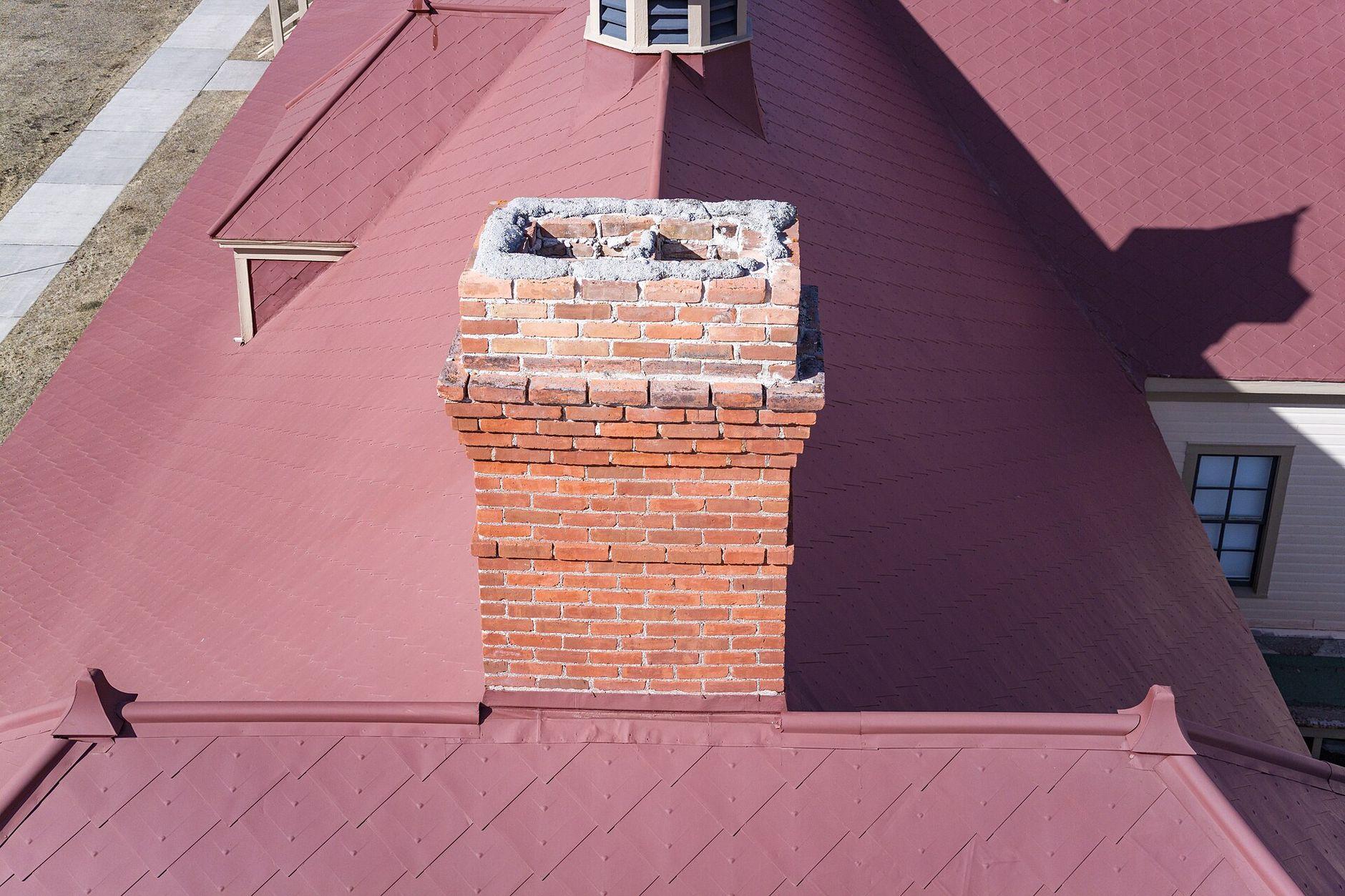
- Level 1, $53. A visual check of everything that can be reached and seen with the fireplace as it stands: firebox, damper, the lower flue, the crown, the cap and the brick from the roof. It suits a chimney whose use is not changing, owned by someone who knows its past.
- Level 2, $385. Everything in Level 1, plus a camera run through the full height of the flue, a look at the chimney wherever it passes through an attic or crawl space we can reach, and a written report with the stills. This is the one that suits a transfer.
The third depth, Level 3, involves opening up masonry or wall finishes. It only comes into play when a Level 2 finds a problem it cannot see the end of.
The order of things during escrow
The contract gives the buyer a period to investigate the house. The chimney fits into it most easily when it runs in parallel with the general inspection rather than after it. The sequence we suggest:
- Book the chimney at the same time as the general inspector. Waiting for the general report's referral costs you part of the window.
- Arrange access through the agents. We need the fireplace clear, the roof reachable and any attic hatch near the chimney open.
- Receive the report. You get the written findings and photos, with a plain note on how serious each one is.
- Turn findings into a request. Where we have a published price, it goes next to the finding. Where we do not, the report says what kind of repair it is, and we can write a scope.
- Order repairs or agree a credit. If repairs happen before closing, a second look afterwards gives the buyer a dated record that the work was done.
Nothing in that order needs a day count to work. It needs the chimney booked early rather than last.
What we tend to find in Lynwood houses
Most of the houses we inspect in Lynwood are single-story homes from the middle of the last century with one brick chimney. The findings repeat often enough to list:
- Cracked or shifted clay tiles inside the flue, often at joints, sometimes from old quakes and sometimes from a chimney fire nobody reported.
- An open flue with no cap, or a cap with no arrestor screen on a wood-burning fireplace.
- A crown with cracks that let water into the top courses.
- A gas insert or log set with unclear history. We note whether an insert has a liner to the top and a visible data plate. Permit records are the city's to confirm, and we say so rather than guess.
- Brick and mortar above the roof that has loosened since the last big shake.
Turning findings into numbers
For the repairs that carry a set price on our list, the report can do the arithmetic for you:
| Finding | Where the price starts |
|---|---|
| Water staining at the chimney, source unclear | Leak tracing and repair, $550 to $3,300 |
| Water pooling behind a wide stack | Diverter on the uphill side, $440 to $990 |
| That pooling plus tired flashing all round | Diverter with every flashing piece new, $660 to $1,650 |
| Heavy soot or creosote in the flue | Brushing one flue, from $410 |
An open flue or a hood with no screen needs a cap. That one is quoted after we measure.
Liners, crowns, rebuilds and damper work have no set price; for those the report names the repair and we can write a costed scope if either side asks. Our post on chimney rebuild or repair explains how that line gets drawn.
Book the Level 2 for your escrow and say whether you are buying or selling and who should receive the report. We set the visit around the general inspection if it is already booked.
For sellers thinking ahead
A seller can order the same Level 2 before listing. The point is not to hide anything; it is to know first, decide whether to repair or disclose, and hand buyers a report rather than a surprise. A seller-side report does not stop a buyer from ordering their own, but it tends to make that inspection shorter and the conversation calmer. Agents who want the booking process in detail will find it on our page for real-estate agents, and the full home sale outline is on the home sale inspection page.
When repairs are part of the deal
If the buyer asks for repairs, the scope matters as much as the price. A request that says "repair chimney" leaves room for a quick patch. A request that names the finding and the fix, such as a cap with arrestor screen over the open flue, leaves less. The up-to-code repairs page lists the fixes we see most.
Getting it on the calendar
If you are in escrow on a Lynwood house with a fireplace, start at our contact page. Give us the property address and your side of the deal, and we come back with a visit time that fits the inspection period.
Want the Rule Checked at Your Chimney?
Malloy works from Lynwood across South Gate, Inglewood and Los Angeles. We measure the chimney against the standard this guide covers, photograph what we find and quote any fix in writing, with a note on whether the city wants a permit.